

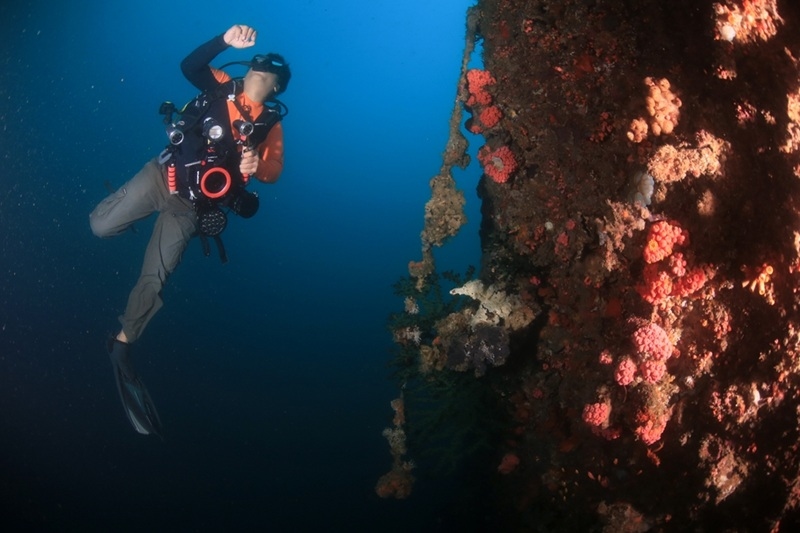
The deep ocean is basically Earth’s hidden basement. It’s huge, dark, pressurized, and still wildly unfamiliar. Most people picture “deep sea” as a few dramatic creatures and a couple of famous shipwrecks. But that’s only the highlight reel. The reality is thousands of miles of seafloor that humans have barely seen, plus ecosystems that don’t behave like anything on land.
What’s changed lately isn’t the ocean. It’s the gear. Cameras got better. Sensors got smarter. Robots got tougher. And the software that turns raw sonar and video into usable maps got a lot more capable. So now the deep sea is giving up secrets that used to stay hidden for decades.
This guide breaks down the technologies that are making that happen, and why it matters beyond curiosity.
deep sea exploration is difficult for a simple reason: pressure. At extreme depths, the ocean pushes with crushing force. Light disappears quickly. Radio signals don’t travel well underwater. And small equipment failures become big problems fast.
So exploration has to be planned like a space mission. Redundancy. Slow movement. Constant monitoring. The best teams treat the ocean as a demanding environment that doesn’t forgive shortcuts.
It’s also why progress often comes in waves. A new sensor arrives. A better battery arrives. A stronger housing material arrives. Then suddenly missions can go deeper, stay longer, and collect better data.
And once a mission can stay longer, discovery rates jump. That’s when the ocean starts looking less like a blank zone and more like a living world with structure and patterns.
One of the biggest breakthroughs is ocean mapping technology. Modern sonar systems and data processing tools can map seafloor features in detail that would have been unthinkable a couple of decades ago. The difference is not just higher resolution. It’s speed and coverage.
Mapping is how teams decide where to send a robot or submersible next. It’s the difference between “let’s wander” and “let’s target that ridge, that trench wall, that strange mound that might be volcanic or biological.”
Better maps also mean better science. Researchers can connect geology to biology, track how habitats change over time, and pinpoint areas that deserve protection. In other words, mapping turns mystery into a workable plan.
A lot of modern discovery comes from underwater robotics research. ROVs, AUVs, and hybrid systems can go where humans can’t, stay down longer, and return with video, samples, and sensor readings without putting a crew at risk.
ROVs are tethered and controlled from a ship, which makes them great for precision work. AUVs are untethered and run programmed missions, which makes them great for sweeping surveys. Both are evolving fast, especially in navigation and autonomy.
Today’s robots can hover, stabilize, and manipulate objects with surprising finesse. That matters for sampling. It also matters for wreck documentation and ecological studies where disturbing the environment can ruin the data.
Robots don’t replace scientists. They extend reach. They let scientists ask bigger questions with safer tools.
Robots do a lot, but humans still want direct observation sometimes. That’s where deep ocean submersibles come in. These are engineered vehicles designed to survive intense pressure while carrying cameras, sensors, and sometimes people.
Submersibles offer a different kind of exploration. Human eyes can notice subtle patterns. Human decision-making can react quickly to unexpected discoveries. And the psychological impact is real too. When a scientist actually sees a deep ecosystem with their own eyes, it changes how they describe it, study it, and fight to protect it.
Of course, submersibles are expensive and complex. That’s why the most common approach now is mixed missions: maps guide robots, robots scout targets, and submersibles visit the most promising spots.
If someone thinks the deep sea is mostly empty, marine biodiversity discoveries are the reason that idea keeps getting wrecked. Every time researchers visit a new habitat like a vent field, seamount, canyon, or trench slope, they tend to find species that don’t match the usual expectations.
Some creatures thrive in total darkness. Some live off chemical energy instead of sunlight. Some have bizarre adaptations that look like science fiction but are simply evolution doing its thing.
These discoveries are not just “cool.” They reshape how scientists understand life’s limits and how ecosystems function under extreme stress. They also highlight how fragile some deep habitats may be, because many deep-sea species grow slowly and recover poorly from disturbance.
The ocean is not a separate planet. It’s a central part of Earth’s climate system. That’s why climate impact on oceansshows up in almost every serious ocean research program now.
Warming water changes circulation. Acidification affects shell-forming organisms. Deoxygenation shifts where species can survive. And changes in surface conditions can ripple downward in ways researchers are still trying to map out.
Deep sea studies help because the ocean stores heat and carbon. Understanding what happens at depth improves climate modeling and helps scientists predict how ocean changes may affect fisheries, storms, and coastal systems over time.
This isn’t just academic. It touches food supply, economies, and public safety.
Modern missions increasingly run like integrated systems. Map first. Scout with robots. Sample precisely. Record everything with synchronized sensors. Then analyze using software that can spot patterns humans might miss.
This is where ocean mapping technology shows up again in a practical way. Better maps reduce wasted ship time, and ship time is expensive. They also reduce environmental disturbance because exploration becomes more targeted and less random.
Better planning also makes results easier to repeat. If a team returns to the same ridge or trench wall years later, they can compare the habitat with real precision instead of guessing whether they’re in the same place.
The second wave of underwater robotics research focuses less on “can we go deep” and more on “can we think underwater.” Not literally think like a human, but navigate and adapt with less constant supervision.
That includes obstacle avoidance, smarter path planning, and better detection of interesting features in real time. If a robot notices a chemical plume or a sudden change in terrain, it can adjust its route to investigate instead of blindly following a preset pattern.
This matters because the ocean is dynamic. Currents shift. Visibility changes. Targets aren’t always where the map predicted. Smarter robots can react in ways that make missions more productive and safer.
The second mention of deep ocean submersibles is about specialization. Rather than one submersible trying to do everything, some programs focus on vehicles optimized for specific goals: high-resolution imaging, delicate sampling, long-duration observation, or deep trench dives.
Specialization improves results. A submersible designed to capture stable, high-quality imagery can document habitats without stirring sediment. Another designed for sampling can collect biological or geological materials without destroying the surrounding environment.
That means deeper science with less disruption, which is exactly what the field is trying to move toward.
The second pass on marine biodiversity discoveries matters because discovery often leads to difficult questions. If a habitat is unique and slow to recover, how should it be treated? What activities are acceptable nearby? How do we balance scientific curiosity, conservation, and resource interests?
Deep-sea life isn’t just “down there.” It’s part of a connected system that supports ocean stability. Learning what lives at depth helps guide smarter decisions on what should be protected and how human activity should be managed.
The second mention of climate impact on oceans is the reminder that deep sea research is not only about weird creatures and geology. It’s about monitoring change. Long-term sensor networks, repeat mapping missions, and deep water sampling help scientists detect shifts that surface-only research might miss.
That deeper data improves the big picture. It clarifies how heat and carbon move through ocean layers and how ecosystems respond over time. So yes, deep sea exploration is about mystery. But it’s also about accountability. The ocean is changing, and we need better measurement, not guesses.
Extreme pressure, darkness, cold temperatures, and limited communication make deep missions technically complex and expensive compared to surface research.
Not really. Robots handle long surveys and risky tasks, while submersibles offer direct observation and specialized missions. Many programs use both together.
Deep ocean measurements improve understanding of heat and carbon storage, ecosystem change, and circulation patterns, all of which influence climate models and forecasts.
This content was created by AI