

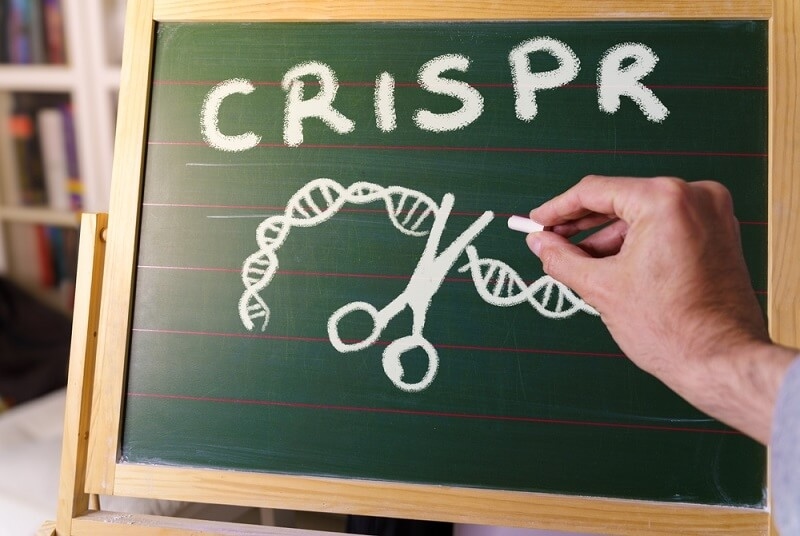
Scientists have developed a new way to treat people with sickle cell disease and muscular dystrophy. CRISPR is an improved gene-editing technique that works within the body to delete nonfunctional DNA from the human genome. The creation of new gene therapies using CRISPR is enabling patients to regain and keep their health, and serves as an inspiration to those who wish to recover.
DNA is a sequence of chemical structures that contains the instructions for creating everything in a living organism, including the organism's physical traits (for example, eye color and height). Mistakes occasionally occur in the DNA sequence, which can cause illness. CRISPR gene editing works like a pair of scissors, identifying and cutting out the 'bad' (or non-functional) part of the DNA so that the correct DNA sequence is restored.
CRISPR allows patients to receive a permanent solution that prevents them from needing to take medication to mask their illness's symptoms for a limited time. By correcting the underlying cause of the illness or disease, patients will no longer need drugs or therapy to maintain health or well-being. These advances in genome editing technology are becoming increasingly common in hospitals. Because the tool is so innovative, it knows exactly where to go without messing up the other parts of the DNA.
Some children are born with diseases that they get from their parents. This is called a genetic disease. For a long time, doctors could not do much to help. But now, CRISPR medical applications are changing that. Let’s look at some ways this helps:
When we talk about gene therapy innovations, we mean new ways to deliver healthy instructions into the body. It is not just about cutting DNA anymore. Now, scientists can also turn specific genes on or off like a light switch. This is one of the most essential biotech breakthroughs in 2026 because it is much safer than the old ways of doing things.
Researchers are also finding ways to use these tools within the person’s body rather than taking cells to a lab. This makes the treatment much faster and easier for the patient. It means less time in a hospital bed and more time playing outside or being with family.
This is not really "magic," as people often believe, but simply perfect science that has come about from many years of studying how tiny bacteria defend themselves by using the ability to "cut out" viruses and other harmful organisms. Scientists learned to apply this ability to humans.
Here is an expected step-by-step breakdown of how this would look to a patient.
By 2026, biotechnology will have developed to the point of ensuring that CRISPR technology targets only the areas that require correction, significantly improving this capability.
There is so much happening in the field of genetic disease treatment research right now. Every week, there is a new story about someone who walks or sees better because of these tools. Most of this work is done in large labs, where experts spend all day examining specimens under microscopes. They want to make sure that CRISPR gene editing is ready for everyone who needs it.
One big goal is to make these treatments cheaper. Right now, it costs a lot of money to fix DNA. But as we learn more, it will get easier, and more people will be able to get help. This is why CRISPR medical applications are so crucial for the future of medicine.
This year has been huge for science. We are seeing biotech breakthroughs in 2026 that people only dreamed about ten years ago. For example, some scientists are working on ways to use advances in genome-editing technology to prevent people from getting sick from bugs like mosquitoes.
Others are looking at how gene therapy innovations can help people who have trouble eating certain foods. By changing just a tiny bit of how the stomach works, they can eat anything they want without getting a tummy ache. This kind of research into genetic disease treatment is what makes the future look so bright.
Scientists refer to this process of correcting errors in the genetic code with CRISPR gene-editing technology. In 2026, doctors used biotechnological advances to develop gene therapy protocols to treat a variety of diseases. As more research into treating genetic diseases is conducted, more individuals will be able to live well thanks to the impressive advances in genome-editing technology.
Yes, doctors are cautious. They conduct many tests in genetic disease treatment research to ensure the tools work perfectly before they are ever used on a person.
Not every disease yet, but CRISPR medical applications are growing. Right now, it works best for diseases caused by one tiny mistake in the DNA code.
Because it changes the instructions in the cells, the goal of these gene therapy innovations is to make the fix last for a very long time, sometimes for a person's whole life.
Mostly in big hospitals for now. As genome-editing technology advances, it will be easier for doctors in small towns to use these tools too.
This content was created by AI