

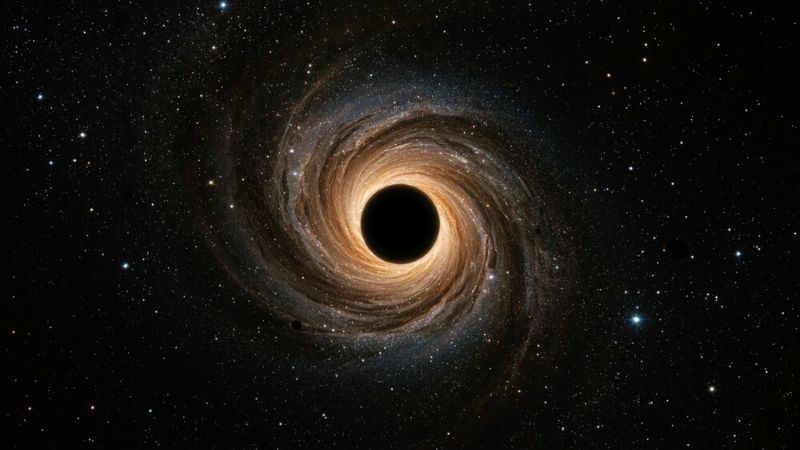
The stars in the sky are very pretty, but dark matter research shows us that most of the universe is actually hidden. Using dark matter detection experiments, scientists try to detect the invisible matter we cannot see with our eyes. These astrophysical discoveries in 2026 are helping us understand why galaxies stay together rather than fly apart into the dark. It is like finding the invisible strings that move a puppet on a stage. Let’s break it down to see how these secrets of the stars are being discovered by brilliant people today.
Here is the thing about the night sky. If you only look at the bright lights, you are missing most of the story. Dark matter research is the study of a special kind of "stuff" that has gravity but does not shine. What this really means is that dark matter acts like a giant net that catches gas and dust to build new worlds. Without this invisible net, the stars would not have a home to live in.
Scientists use powerful computers to build models of how the universe evolves. These astrophysical discoveries in 2026 show that dark matter existed at the very beginning, even before the first sun began to glow. Because we are doing more dark matter research, we can now map where this invisible mass is hiding between galaxies.
It is tough to catch something that you cannot see or touch. This is why dark matter detection experiments are built in extraordinary places. Some are at the bottom of deep holes in the ground, and others are inside giant tanks of cold gas. The idea is to wait for a tiny piece of dark matter to hit a regular atom, which makes a small spark.
What this really means is that we have to be very patient to solve the mysteries of space. These dark matter detection experiments are the best way to prove that the invisible stuff is actually real and not just a math trick.
This year has given us many new clues about the sky. One of the most significant astrophysics discoveries in 2026 is that some galaxies have much more dark matter than others. Some galaxies are almost entirely composed of invisible matter, which makes them appear as "ghost galaxies" in our telescopes.
These astrophysical discoveries in 2026 help us understand how gravity works over very long distances. We can see how dark matter bends light, making distant stars appear in a funhouse mirror. Every time we find a new ghost galaxy, our dark matter research gets more exciting.
The whole universe is getting bigger every single day, and studies of universe expansion help us track that growth. It is as if the space between the stars is stretching like a piece of rubber. Scientists use studies of the universe's expansion to see whether dark matter is trying to pull everything back together while other forces push it apart.
What this really means is that dark matter is in a tug-of-war with the rest of the universe. These universe-expansion studies are a big part of determining whether we will stay where we are or move further into the dark.
To find dark matter, we have to make a little bit of it ourselves. This is what particle physics breakthroughs aim to do in large underground tunnels. Scientists smash tiny bits of atoms together at super-fast speeds to see what comes out. They hope that one of these particle physics breakthroughs will reveal a brand-new particle that matches what we see in space.
Every time there are particle physics breakthroughs, we learn more about the building blocks of everything. It is a tiny way to answer huge questions. If we can make dark matter in a lab, then dark matter research will finally have the answer it has been looking for for a long time.
When scientists finish a big project, they write cosmology research updates for everyone to read. These updates tell us about the universe's history from the very first second. Recently, cosmological research has focused on how dark matter helps "seed" the formation of massive black holes.
By following these cosmology research updates, we can see the family tree of our own Milky Way galaxy. It is a story that spans billions of years, but dark matter research is helping us read every page.
Dark matter research is the key to unlocking the secrets of the night sky. Through dark-matter detection experiments and astrophysical discoveries in 2026, we see the invisible world. With help from studies of universe expansion and breakthroughs in particle physics, we learn how the universe was formed and where it is going.
No, it is not dangerous at all. It flows through your body every second, and you don't even feel it. It does not have any germs or radiation that can hurt you.
We know it is there because of gravity. It pulls on the stars just like the Earth pulls on a ball when you drop it. Dark matter research tracks that pull.
Dark matter is like a glue that pulls things together. Dark energy is like a push that makes the universe grow bigger. Universe expansion studies look at both.
Because space is made of particles! If we understand the smallest bits, we can appreciate the largest galaxies in the sky.
This content was created by AI